
Decluttering children’s toys is one of the hardest areas to work through. You’re not alone.
- Our step by step approach is
1. Throw away any garbage or broken toys
2. Place the most important and special toys in a safe place
3. Keep only 3-6 categories of toys
4. Donate the rest.
Studies show most kids are overwhelmed by too much stuff. Check out this study for more information.
It is safe to say your family members would probably all benefit from a smaller number of toys in the home. AND you don’t have to be a minimalist to want are more peaceful living room.
This is for EVERYONE.
*This work is certified human. I choose not to use AI tools to maintain my integrity as a writer. What you are reading is from my heart. Thank you for being here.*
There is so much to talk about here so let’s get started!

Quickly, envision a toilet paper roll. The cardboard tube that is essentially just a piece of garbage.
Now, could a child find something creative to do with it?
Of course they could! The possibilities are endless. The fun could go on and on!
My point is; as you go about decluttering children’s things they will inevitably say everything is SO special and they could still use it for something.
But let’s all remember that they could say that about a literal piece of garbage.
It is up to the parents to use our superpowers of observation to make the final judgement on which items stay or go.
First things first…. Thou shall NOT LIE.
I feel very strongly about this and talk about it often.
We should NEVER lie to our children.
There are some things they don’t need to know, but we should never lie to them. We want our children to know they can trust us.
It’s perfectly fine to say, “There are some things you don’t need to know.”
When we are dealing with kids’ stuff, they can be very sentimental about it. That’s okay!
We can be tactful, while still showing them how to manage material possessions intentionally.
We don’t want to raise hoarders.
If you have a particularly sentimental child, offer them certain storage bins or drawer to house their special things.
Once the big bin is full, then they will know they have to start choosing things to part with. That will really help them feel like they have some control in the process.
Moms and Dads…. You are the boss. The children are not in charge. They can have opinions and preferences, but the ultimate decision is up to Mom and Dad.
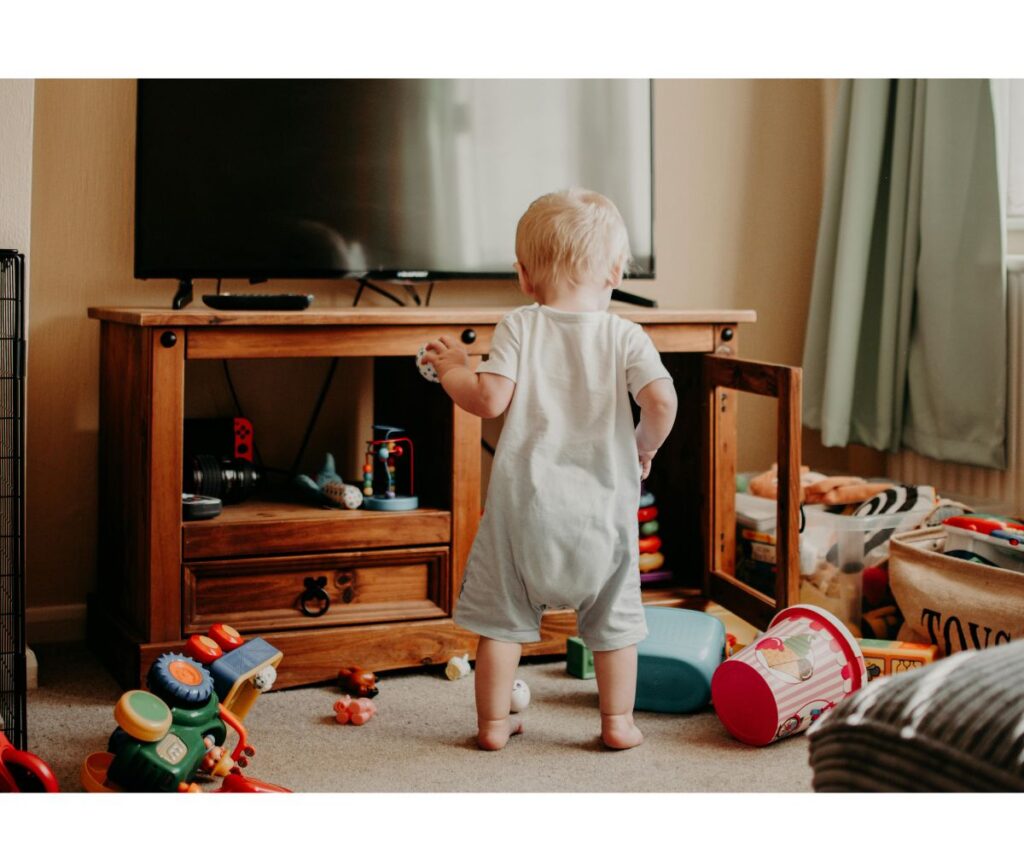
The parents exercising their authority over a child is actually going to give them a sense of security, even if they struggle with a decision initially.
As younger kids get older, they will be able to manage more things and will eventually take over the care of their possessions.
As this happens, you can let them make more and more of the final decisions on donations.
This will vary with each child, and the parents are STILL in charge of what stays in the home.
The first (and easiest) step in the decluttering process is…. Throw away the garbage!
This is pretty self-explanatory for the most part. Just throw away anything that is trash.
Crushed paper, broken pencils, and anything with missing pieces all just get tossed in the garbage.
A good rule of thumb… If I wouldn’t buy it at a second-hand store, then I don’t bother donating it.
If it’s broken, stained, or missing parts it is simply garbage.
Throw. It. Away.
If you find something and think, “I could easily fix this.” I want you to be extremely realistic about when you would actually fix said toy.
Most of us don’t have much time to spare on fixing broken toys. Setting it on the dining room table for two weeks is only going to give you loads of anxiety.
If you really want to fix something then try scheduling a time when you will fix it. Put it on your calendar like an appointment, and if it doesn’t happen then you can give yourself permission to let it go.
You will so much more free with less stuff weighing you down.
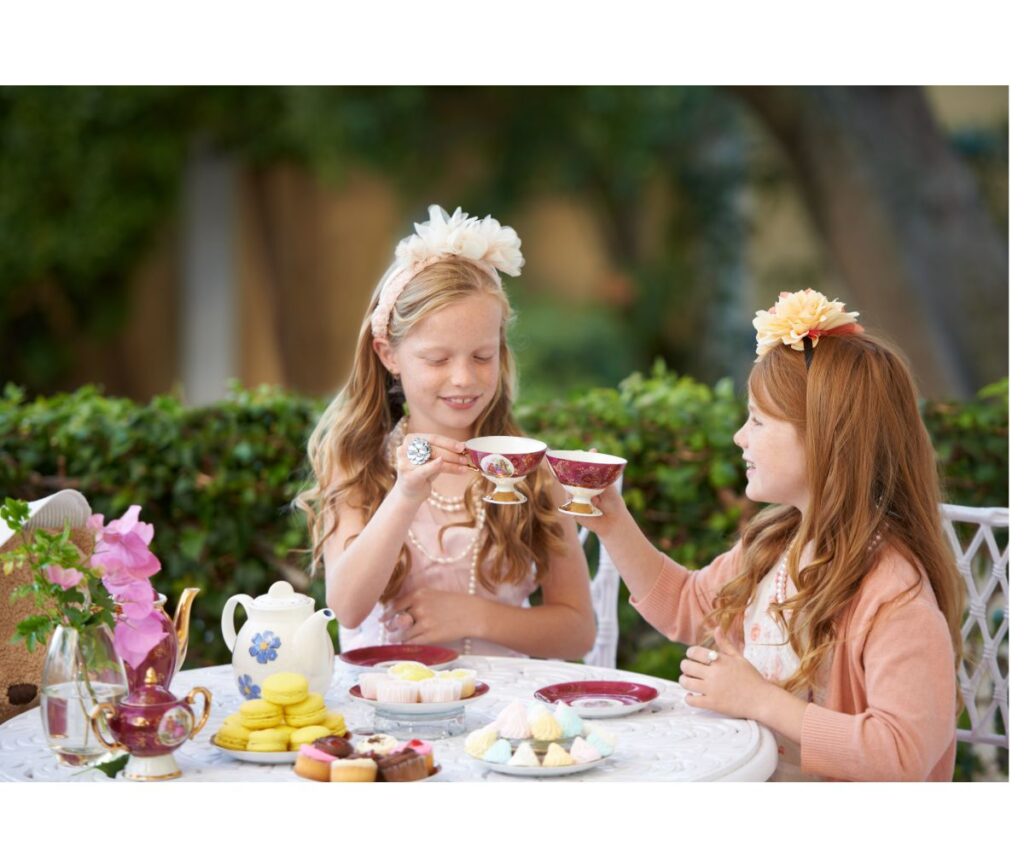
It can be very helpful to explain to the children how donating toys works.
Things go to a thrift store and then people can come shop at the store and find things they might need.
If your kids are familiar with the joys of thrifting (my favorite sport) then they have learned to appreciate that someone was willing to donate the treasures they found.
It’s a wonderful “new life” for the item in question.
And something that isn’t talked about often enough is: the other option is hoarding tons of boxes of junk in our basements or storage units until we are literally swimming in clutter.
We have no clue what we even have because there is no way to manage so many items.
Then the items that could have been given a new life at a thrift store are then damaged and ruined from dirt, bugs, water, and time.
Donate things before they are ruined in storage so they can still fulfill a purpose.
The next steps are deciding on your categories of toys.
Try to only have 3 or 4 categories of toys to rotate through (as a goal).
I understand how hard it is to pare this down, so you could make your goal 5 or 6 categories of toys.
Categories of toys are things that all go together like: action figures, toy cars, LEGO, and magnet tiles.
*I don’t include board games or picture books as a rule.
Maybe you have wooden blocks, cars, and toy kitchen stuff. If you’re then gifted something that doesn’t fit in any of those categories, you can choose if you want to find a place for it, or just pass it along.
Choosing a toy collection that is more geared towards the open-ended toys is going to be very beneficial, especially for younger children.
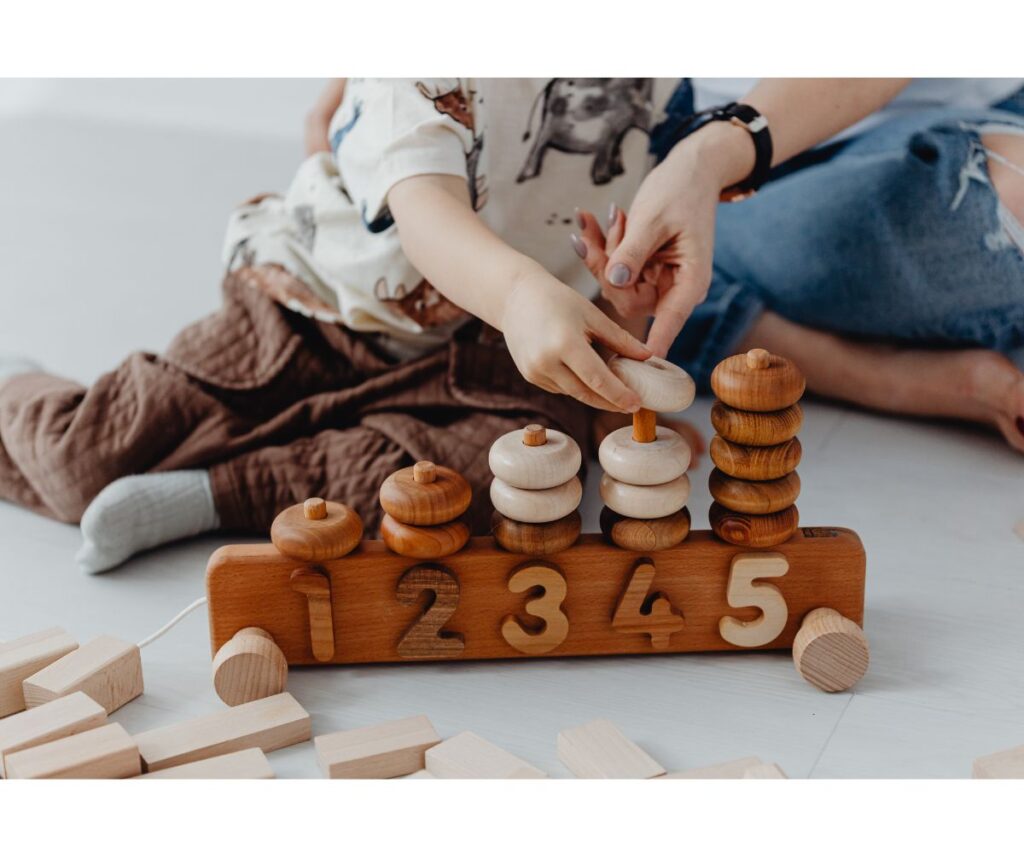
Toys that are never “finished” like a puzzle, such as building toys, art supplies, or dolls are great open-ended toys that encourage imaginative play.
One of my top tips for choosing which toys to keep or pass along is…. How annoying is it for Mom?
We had a toy that was really fun until we accidentally realized if the motorized tires are running and it’s placed next to someone’s head it wraps their hair up in the tire and chaos ensues.
Those toys don’t need to be invited to your home anymore.
Another hard pass for me is anything containing a button battery. If it can be accidentally swallowed and potentially kill a child, then it is not invited into our home.
How can you categorize your kids toys so they can be better managed?
Now that you have your categories of toys decided, you can part with the rest.
Most communities have plenty of donation locations. Everyone loves a good thrift store.
That’s always a good option, but there are usually women’s resource centers that will take donations of home goods that are in good condition.
Your local law enforcement or town hall should be able to direct you towards that if you have things that could benefit moms in need.
If you are really struggling with deciding which things to keep or donate….
I highly recommend using a box to store things away for a time. If you or the kids don’t miss anything that is packed away in a box, then you will know it is safe to donate it.
(They can ask for something specific by name, but never let them rummage through them.)
Just make sure you actually get rid of those boxes! Putting a date on the boxes is helpful because then you won’t need to even open them up and try to remember when you packed these things away.
Okay, let’s talk about the hang ups.
Yes, we can all agree in principle that a highly simplified toy area would be best for our children…. but it can be very overwhelming to go through! I hear you.
Challenge #1
– Trying to go through kids things while the kids are “helping”. They’re moving your piles, pleading their case for every single item, and asking for snacks and potty breaks.
Setting a time when they’re not home might be your best option. Maybe you and another mom friend could swap times of taking each other’s kids to work through a few things at home.
*I have decluttered with and without my children. The times when I’ve gone hard without them, they have always reacted with amazement and joy at a highly simplified and clutter-free space.
Challenge #2 –
TIME. Where do we find the time?
Okay, valid concern. You may have to do this a little at a time. But it’s still worth doing.
Maybe just take a first pass through things now, and you will feel the momentum building. Then you can just challenge yourself to do 15 minutes each day for the rest of the week.
Slow progress is still progress!
Challenge #3
– What if we get rid of something and regret it?
This should be an entire post.
It seems counter-intuitive, but the kids will take better care of their things if there are less things stressing them out.
Young children are overwhelmed by toy clutter. Having a play area that is inviting and easy to manage will be the best way for them to enjoy their possessions.
If you’re still unsure, simply try boxing up some things and stowing them away. Once your family feels the benefits of a calm environment, you will grow in your confidence in decluttering.
One of the most unexpected benefits of decluttering is the clarity with which we now see our purchases.
When you’re in the store looking at rows and rows of new toys, you will then have a new framework to think through your purchases.
You will know what things continue to make the cut and which things (closed-ended toys) tend to get passed along. This will help you be a better gift giver, and your toy box will thank you.
Next time you’re at the toy store, there’s a good chance you will make it through without purchasing something you later regret!
You can do this!
This isn’t just about having fewer toys.
That’s a big component, but having a toy area that is easy for the kids to clean up will make the home feel so much more peaceful.
\The kids will play joyfully and not feel so overwhelmed.
No child will look at a parent and say, “I have a lot of toys and it would be a good idea to declutter my possessions.”
However, if your child is constantly ‘bored’ or asking for new toys, it could be that they are overwhelmed with their environment and looking for an escape.
Especially if they are surrounded by toys as it is!
Even if you’re not a minimalist, your home would benefit from being highly simplified and manageable.
Give it a little time and you will feel the difference! God bless you as you work to bless your home and family.
Homemaking matters.

Hi, I’m Stephanie! I’m a Christian wife, mom of 5, homeschooler, and a technically trained chef. I love creating a simple, beautiful life with our sweet family.
I’m so glad you’re here!
Leave a Reply